Roadmap ⑦ · Available individually · €19 · web roadmap + A1 poster · Version 1.0 · As of 2026-08-19
Biotechnology & Gene Editing
Biology becomes manufacturing: the bottleneck is no longer editing, but delivery, price and approval
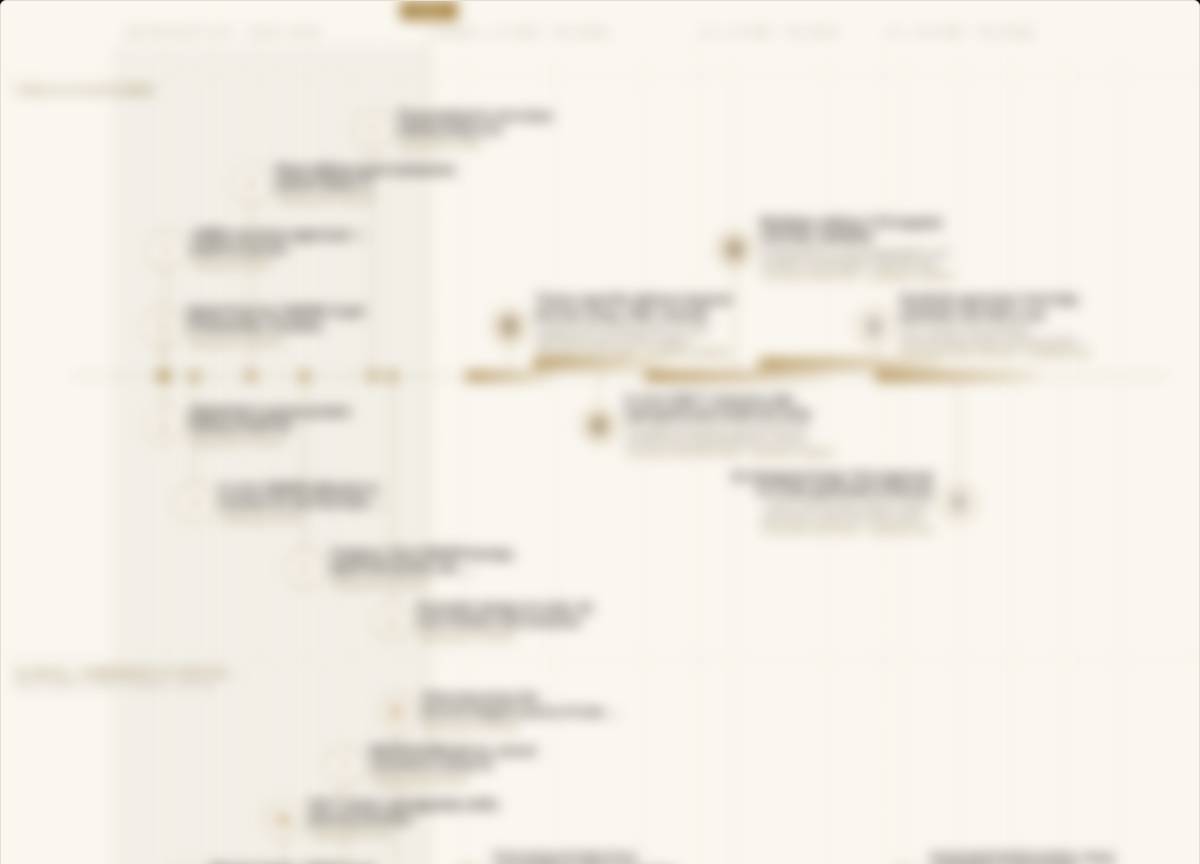
1 Executive summary (excerpt)
In five years biology has become programmable. In 2020 came the Nobel Prize for CRISPR and the solution of the protein-folding problem by AlphaFold; in 2021 Intellia showed that a gene can be edited inside a living human without removing cells; at the end of 2023 Casgevy became the first approved CRISPR therapy. In 2025 a team in Philadelphia developed a base-editing therapy for a single infant within six months — proof that “n=1” medicine is technically possible. What was basic research five years earlier is a procedure today.
The bottleneck has moved. Editing works; the open questions are delivery, price and regulation. Almost all effective in vivo therapies so far reach only the liver — lung, muscle and nervous system are the real frontier. A one-off therapy costs $2 to 3.5 m because cell removal, conditioning and hospital stay are part of it; only in vivo methods (such as CAR-T without cell removal) can cut costs by an order of magnitude. And after Casgevy, approval demands fifteen years of follow-up. In parallel, capital is reshaping the landscape: after the 2020/21 boom came a capital winter, GLP-1 drugs pulled investment into metabolism, and a third of in-licensed molecules now comes from China. Beyond the clinic, biology becomes a production technology — precision fermentation, bio-based chemicals, genome-edited plants — but there costs and, in Europe, the law slow it down.
2 What you get
- Executive summary: what it is about, who it is relevant for, what the roadmap claims
- Roadmap panel: retrospective since 2020 and outlook today → 3 → 5 → 10 years in four layers — interactive, with rationale, dependency chains and confidence per entry
- ADL classification per reference industry (emerging · pacing · key · base)
- Maturity (TRL 1–9) per sub-technology with stated confidence and evidence
- Implications for action per horizon: watch · pilot · invest · ignore — with reasons
- Change journal and complete list of sources, methods used linked
- The A1 poster (594 × 841 mm, portrait) as vector PDF in English and German, plus PNG — with 50+ milestones in four layers, dependencies, key figures, TRL, ADL and action matrix
3 What a roadmap looks like
The freely accessible showcase roadmap Robotics & Humanoid Systems shows structure, depth and poster exactly as you get them here.
4 Questions about buying
- What exactly am I buying?
- Access to the web roadmap (permanent, tied to your e-mail address, sign-in by link without password) and the poster as PDF/PNG for download — as of the time of purchase (version and date are printed on page and poster). Later updates are not included.
- How does payment work?
- Via Stripe (card, Apple Pay, Google Pay, SEPA direct debit and others). You receive a receipt or invoice by e-mail. Price €19; no VAT is charged (German small-business rule, Section 19 UStG).
- Right of withdrawal?
- Digital content: by purchasing you request immediate provision and acknowledge that your right of withdrawal thereby expires — this is stated explicitly once more before payment. Details in the terms of purchase.
- For teams?
- Access is personal. For sharing within a company contact us: info@operation-zukunft.de.